
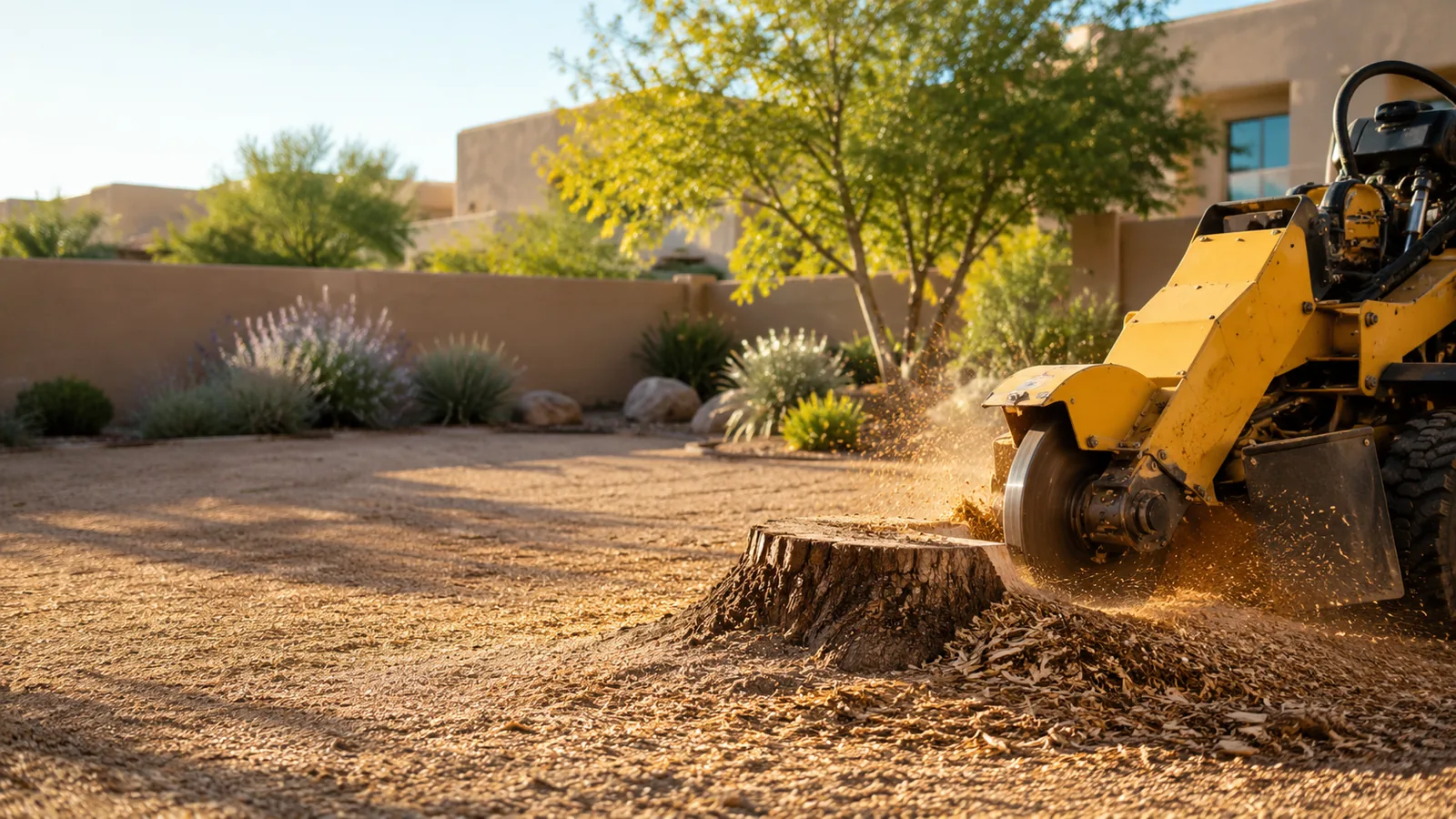
Review stump size, quantity, access, roots, obstacles, cleanup, and final-use factors.
View pageQuotes and cost
What affects the number and the final scope?
Start with the details that make a quote useful and prevent an early estimate from being mistaken for a final approved price.
See why a per-stump number changes with width, route access, quantity, and cleanup.
View pageUnderstand assumptions, onsite confirmation, hidden conditions, and approved scope changes.
View pageUse a checklist for measurements, photos, access, obstacles, cleanup, and the next project.
View pageCompare depth, roots, utilities, property protection, cleanup, qualifications, and written terms.
View pageDepth, roots, and regrowth
What remains below grade after grinding?
Grinding changes the visible stump area, but depth, root flare, remaining roots, decay, and sprouting depend on the site and species.
Follow access review, setup, grinding, chips, remaining roots, and restoration.
View pageDepth depends on final use, roots, obstacles, machine reach, and property conditions.
View pageSeparate the stump and reachable root flare from the full underground root system.
View pageReview root decay, living roots, sprouts, and species-specific follow-up.
View pageUnderstand why grinding the stump does not guarantee every species will stop sprouting.
View pagePlan around old roots, wood chips, settling, soil, and planting position.
View pageAccess, property, and weather
Can equipment reach the stump without damaging the site?
The route, ground condition, buried features, and nearby improvements can matter as much as the stump itself.
Measure the usable opening, turns, overhead clearance, slopes, and operating space.
View pagePlan for equipment travel, soft soil, irrigation, chips, settling, and restoration.
View pagePlan public locates, private-line identification, safe limits, and alternate scope.
View pageEvaluate wet access, rutting, traction, surface protection, and cleanup.
View pageChoose timing around access, weather, irrigation, soil, and the next project.
View pageControl gates, equipment routes, bystanders, shared spaces, and the area after grinding.
View pageDIY and cleanup
Should I rent equipment, and what happens afterward?
Compare the complete DIY project with professional service and define the chip, fill, and restoration result before work begins.
Compare rental costs, delivery, training, access, safety, time, cleanup, and limits.
View pageReview training, protective requirements, buried systems, obstacles, and stop conditions.
View pagePlan chip volume, haul-away, backfill, settling, grading, and the next surface.
View pageChoose onsite use, consolidation, partial removal, haul-away, or soil replacement.
View pageUnderstand remaining roots, chips, soil replacement, settling, and restoration.
View pageManaged and multi-party properties
How should owners, managers, residents, and trades coordinate?
Use organized scopes, notices, access instructions, approvals, closeout photos, and written handoffs when more than one party is involved.
Organize addresses, approvals, tenants, access, cleanup, documentation, and vendor coordination.
View pagePlan residents, parking, common areas, irrigation, work zones, and closeout.
View pageMatch grinding to footprints, excavation, grade, schedule, fill, and the next trade.
View pageCoordinate owner approval, tenant access, turnover deadlines, and property photos.
View pageOrganize approvals, residents, marked locations, shared access, and cleanup.
View page