Plan the new planting location
Planting nearby is usually easier than planting in the exact hole
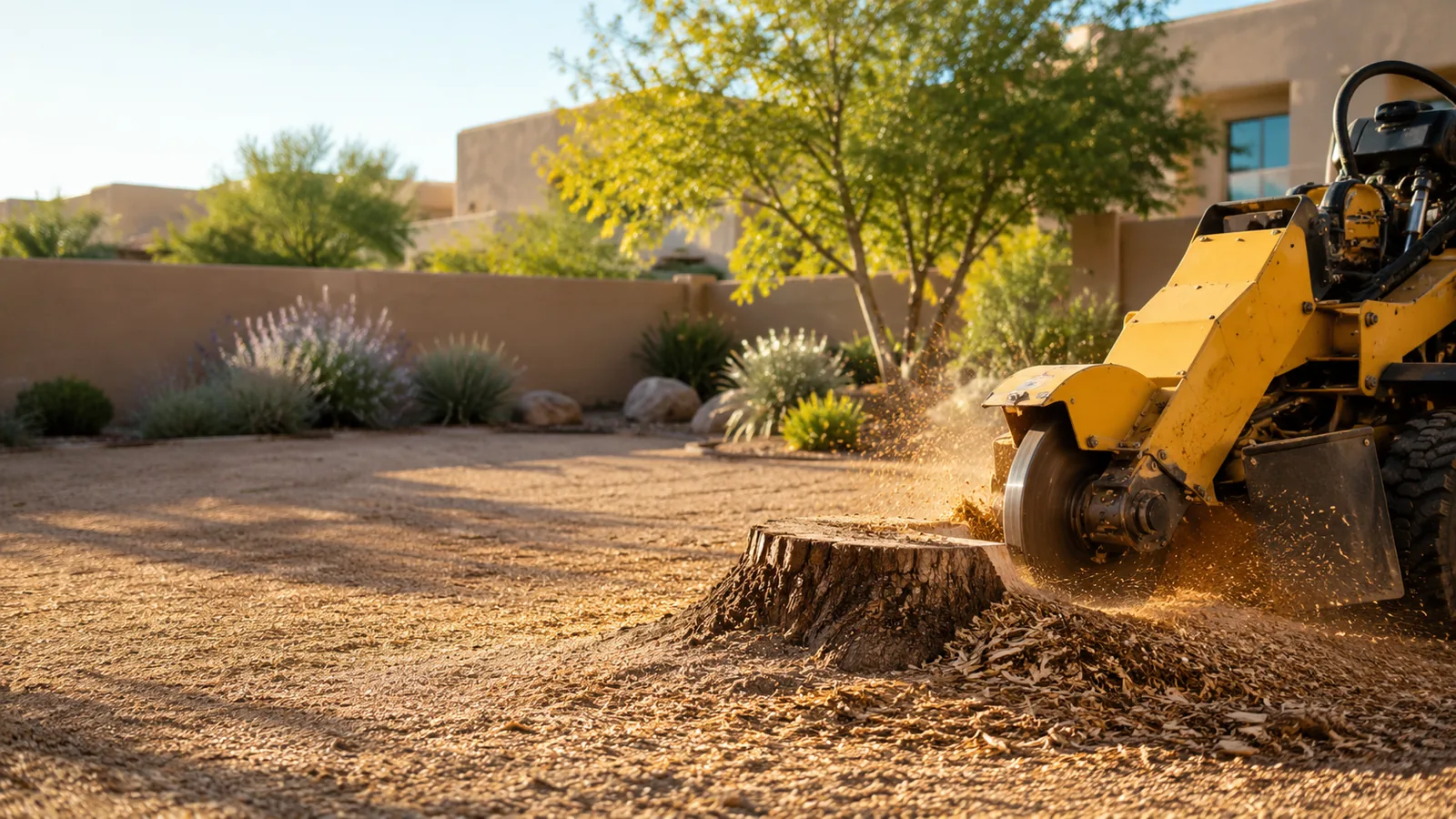
Standard grinding removes the main stump below grade but leaves much of the underground root system. The center may also contain a mix of wood chips and loose soil that changes as it decomposes and settles.
Moving the new tree away from the old center gives roots more undisturbed soil and reduces conflicts with the remaining root crown.
- Choose a nearby location with adequate mature-tree clearance
- Match the tree to available sun, water, and soil conditions
- Remove excess chips and replace with suitable soil
- Allow for settling and irrigation changes
Exact-location replanting may need more excavation
When the new tree must occupy the same spot, additional removal of root crown, major roots, chips, and unsuitable backfill may be needed. A grinder alone may not create a proper planting hole.
Discuss the planting plan with a qualified nursery, arborist, or landscape professional before choosing stump depth or excavation scope.
Do not use a large chip-filled pit as planting soil
Fresh chips can settle, decompose, and temporarily affect how water and nutrients move through the planting area. Remove excess woody material and rebuild the planting zone with soil appropriate for the selected tree.
The new root flare should be planted at the correct grade rather than buried to compensate for future settling.
Ready for a local quote?Send clear photos, project size or scope, access details, and the service needed for a more useful first review.
Common questions
Frequently asked questions
How far from the old stump should I plant?
There is no universal distance. The new tree species, remaining roots, utilities, structures, and available soil should guide the location.
Can a deeper grind make exact-location planting possible?
Deeper grinding may help but does not remove the entire root crown or all large roots. Excavation and soil replacement may still be required.
Should I wait before planting?
Waiting can allow settling, but site preparation matters more than time alone. Remove excess chips, restore soil, and follow planting guidance for the new tree.
Will old roots stop the new tree from growing?
Remaining roots can occupy space and make digging difficult, but the broader concern is creating enough suitable soil volume and correct planting depth for the new tree.
Who should choose the new tree and planting spot?
A qualified nursery, arborist, or landscape professional can match species, mature size, water needs, and site conditions.
Helpful project photos
Show the work area, access, and nearby obstacles.
Clear photos make the first review more useful while keeping the focus on the actual service project.
Whole work areaStep back far enough to show the tree, stump, debris, and surrounding yard.
Size and contextInclude a useful size reference and nearby structures or surfaces.
Access routeShow gates, turns, steps, slopes, and the route equipment would use.
Nearby obstaclesCapture concrete, walls, rock, irrigation, utilities, structures, and roots.