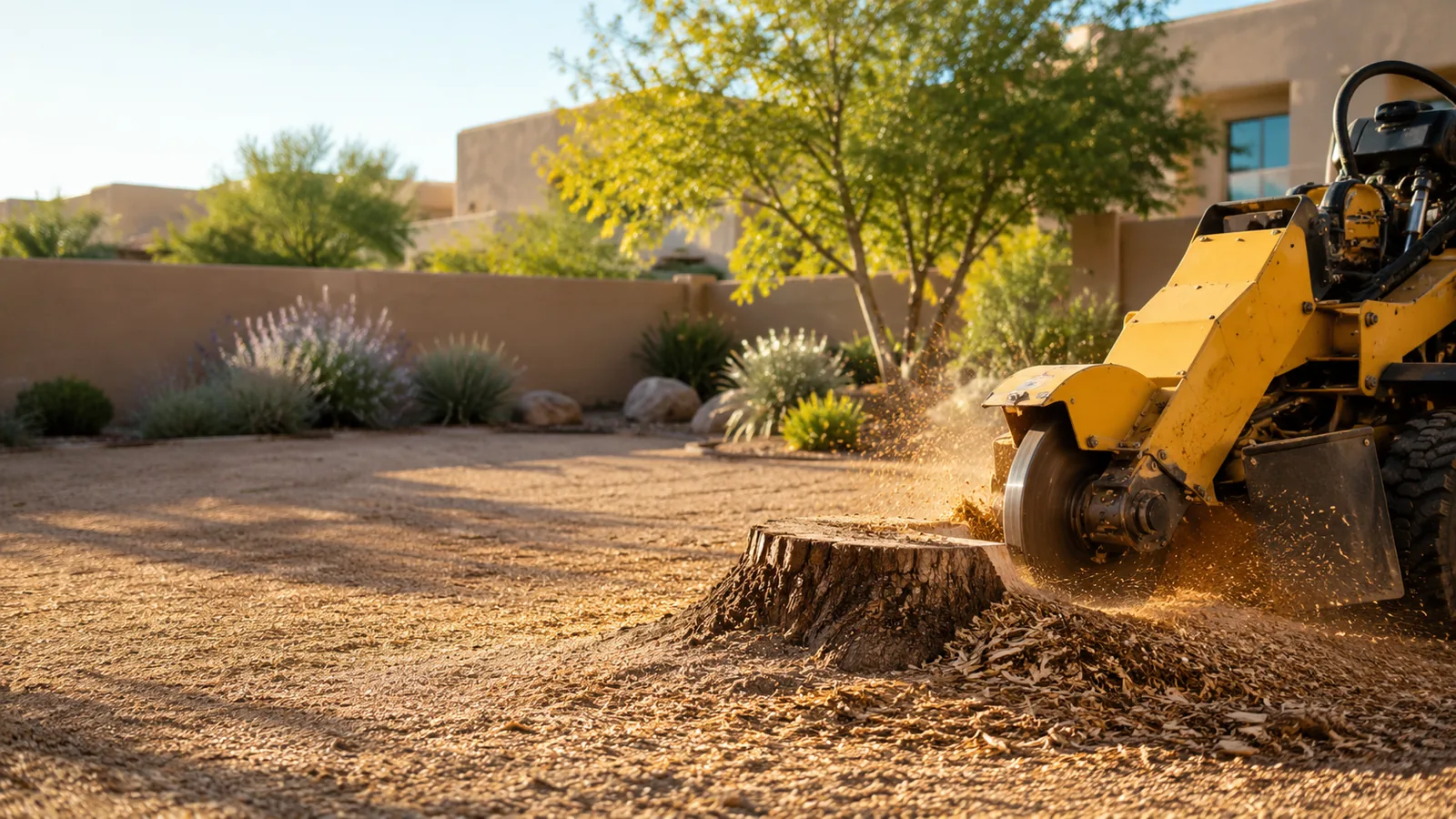
Plan the work in the right order
Tell the stump contractor what will replace the stump
A shallow depression that can be filled for decorative rock is different from a location that must support sod, artificial turf, a new tree, irrigation, a fence post, concrete, or a compacted base. Share the final plan before agreeing on depth and cleanup.
The landscaper and stump contractor should use the same reference for grade and boundaries so material is not removed twice or left where the next crew cannot use it.
- Decorative rock, mulch, or planting bed
- Seed, sod, or artificial turf
- Irrigation, drainage, or lighting work
- Fence, wall, patio, walkway, or concrete
- New tree or large plant installation
Separate grinding from excavation and structural preparation
Standard grinding reduces the stump and reachable root flare, but underground roots remain. A footing, slab, wall, pool, utility trench, or other structural project may require excavation, engineering, or soil preparation beyond stump grinding.
Do not rely on a generic grinding depth when the area must be compacted or carry a load. The next contractor should confirm what must be removed and how the base will be prepared.
Decide what happens to chips before landscaping begins
A large stump can create a large volume of chips mixed with soil. That material may be useful in some non-structural areas, but wood-rich fill can settle and may not match the base requirements for turf, planting, or hardscape.
Confirm chip removal, soil replacement, grade, and restoration as separate line items so the landscaping crew receives the site condition it expects.
Ready for a local quote?Send clear photos, project size or scope, access details, and the service needed for a more useful first review.
Common questions
Frequently asked questions
Should stump grinding happen before landscaping?
Usually yes when the stump blocks the planned work, but the depth and cleanup should be coordinated with the landscaper first.
Can new sod or turf go directly over stump chips?
That may lead to settling or an uneven base. Ask the landscaper what soil removal, replacement, and compaction are needed for the chosen surface.
Is grinding enough before pouring concrete?
Not automatically. Remaining roots, organic material, excavation depth, soil conditions, and structural requirements must be evaluated by the appropriate contractor.
Can irrigation lines be installed after grinding?
They can be planned afterward, but remaining roots, old lines, chips, and the route of new trenches should be reviewed before work begins.
Can a new tree be planted in the same spot?
Sometimes a nearby location is more practical. Old roots, chips, soil volume, species needs, and settling should be considered before planting.
Helpful project photos
Show the work area, access, and nearby obstacles.
Clear photos make the first review more useful while keeping the focus on the actual service project.
Whole work areaStep back far enough to show the tree, stump, debris, and surrounding yard.
Size and contextInclude a useful size reference and nearby structures or surfaces.
Access routeShow gates, turns, steps, slopes, and the route equipment would use.
Nearby obstaclesCapture concrete, walls, rock, irrigation, utilities, structures, and roots.