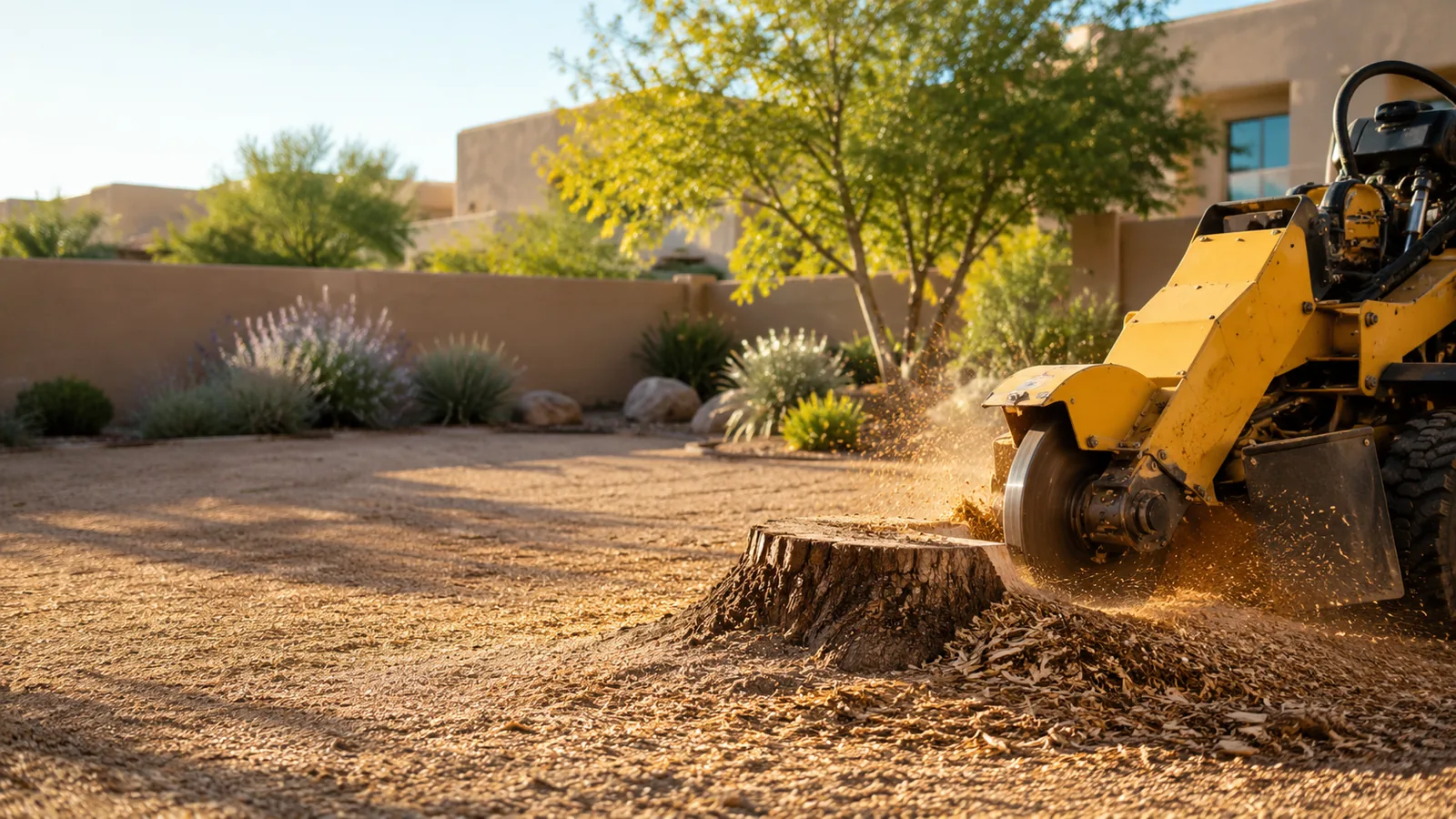
Finish the tree-removal project
Choose the final use before choosing the stump scope
A stump left after tree removal may be acceptable in an unused area, but it can block mowing, turf, irrigation, planting, fencing, hardscape, or future construction. The right next step depends on what will replace the tree.
Basic below-grade grinding is often enough for appearance and routine yard use. A project involving structural work, excavation, or a new tree in nearly the same location may need a different plan.
- General yard cleanup or easier mowing
- New rock, mulch, seed, sod, or artificial turf
- Irrigation or drainage changes
- Fence, patio, walkway, driveway, or construction work
- Replanting a tree or installing a new bed
Document the stump before cleanup changes the site
Take wide and close photos while the stump, route, surrounding surfaces, and recent tree-removal area are still visible. Include a tape measure across the widest root flare and note whether logs, brush, equipment, or fresh soil are still blocking access.
Identify known utilities, irrigation, lighting, septic, propane, or private lines before additional cutting or digging takes place.
Plan chips, fill, settling, and surface repair
Grinding produces wood chips and leaves underground roots. If the area will be landscaped, decide whether chips will remain, be removed, or be replaced with soil. Large stump areas may settle over time as remaining organic material decomposes.
Do not assume grinding includes final grading, soil, seed, sod, irrigation repair, or hardscape preparation. Put those items in the project sequence and scope separately.
Ready for a local quote?Send clear photos, project size or scope, access details, and the service needed for a more useful first review.
Common questions
Frequently asked questions
Do I have to remove the stump after tree removal?
No. The decision depends on safety, appearance, access, sprouting, pests, and what you plan to do with the area.
Is grinding usually enough after tree removal?
It often is for routine yard use and appearance, but construction, excavation, or replanting in nearly the same spot may require more complete root or stump removal.
Should the tree-removal crew leave the stump taller for grinding?
Contractor preferences vary. Coordinate the final trunk height and stump-grinding plan before tree removal when possible.
Can landscaping start immediately after grinding?
That depends on chip removal, soil replacement, remaining roots, grade, irrigation, settling, and the type of landscaping planned.
What photos help after tree removal?
Send the stump, root flare, access route, gate width, nearby surfaces, known buried features, and a wide view of the entire work area.
Helpful project photos
Show the work area, access, and nearby obstacles.
Clear photos make the first review more useful while keeping the focus on the actual service project.
Whole work areaStep back far enough to show the tree, stump, debris, and surrounding yard.
Size and contextInclude a useful size reference and nearby structures or surfaces.
Access routeShow gates, turns, steps, slopes, and the route equipment would use.
Nearby obstaclesCapture concrete, walls, rock, irrigation, utilities, structures, and roots.