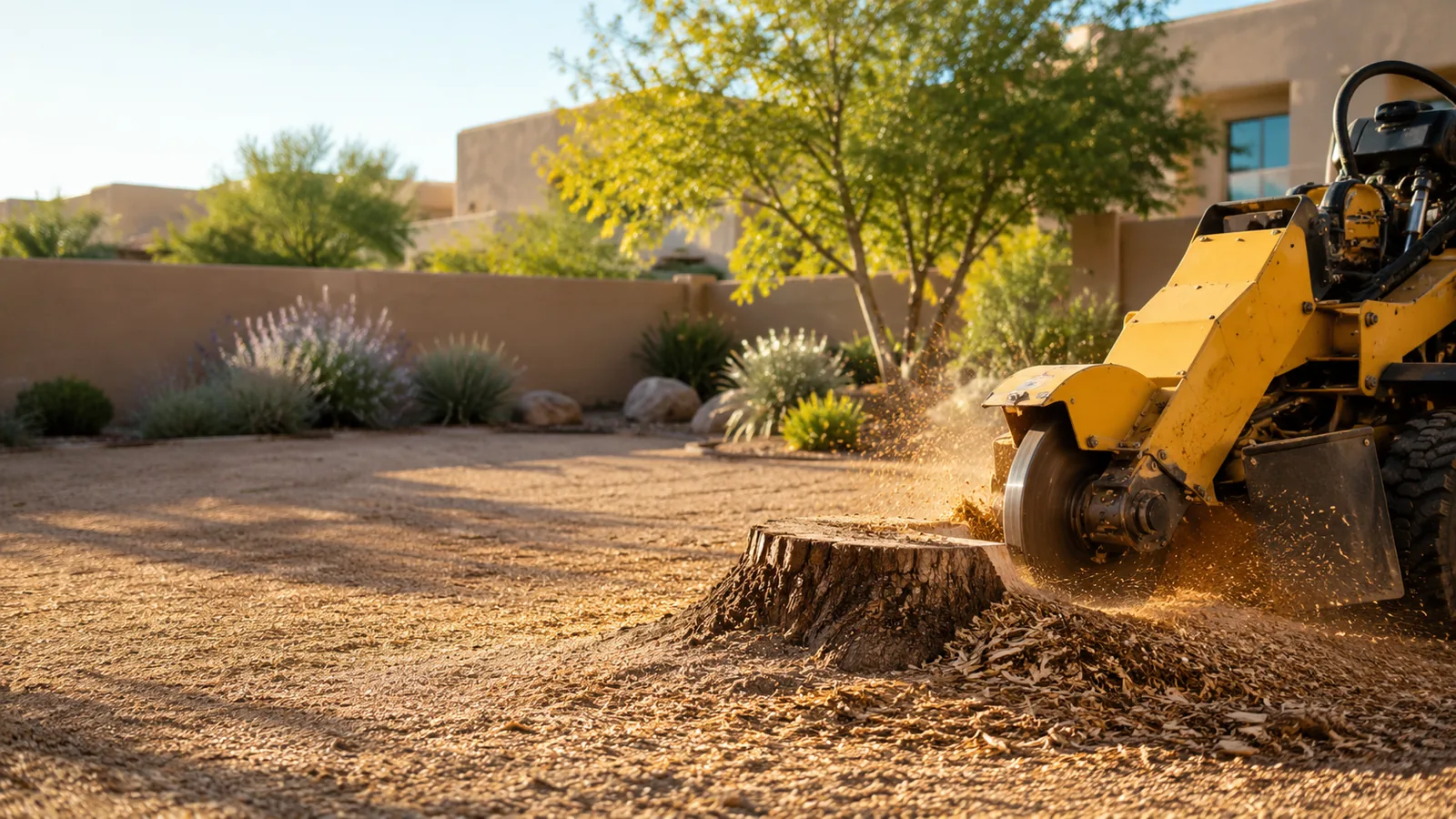
Coordinate the two jobs
Grinding can often follow once tree removal is safely complete
The trunk, limbs, rigging, cranes, vehicles, logs, and debris should be out of the grinder's work zone and access route. The remaining stump height should also be suitable for the equipment and agreed scope.
When the same company handles both services, the work may be coordinated closely. When different companies are involved, confirm where the tree-removal scope ends and the stump-grinding scope begins.
- Tree and hanging hazards are fully addressed
- Logs, brush, and equipment no longer block access
- The stump location and ownership are confirmed
- Known utilities and private lines are identified
- The desired depth, chips, and final use are documented
Site conditions may create a practical delay
Public utility locating, private-line identification, tenant or HOA authorization, locked access, saturated soil, active construction, or another crew working in the same area may affect scheduling.
A delay should solve a specific access, safety, authorization, or project-sequencing issue. Waiting only for the stump to become older does not automatically make the quote or final result better.
Plan the next project before selecting the grinding depth
If landscaping, irrigation, fencing, hardscape, or replanting will follow, share that plan before grinding. A basic cleanup scope may leave roots or organic material that the next contractor needs removed differently.
Photos taken immediately after tree removal can be useful because they show the disturbed area, stump shape, access route, and nearby features before the site changes.
Ready for a local quote?Send clear photos, project size or scope, access details, and the service needed for a more useful first review.
Common questions
Frequently asked questions
Can a stump be ground the same day a tree is removed?
Sometimes, if the tree work is complete, access is clear, required checks are finished, and the contractor's equipment and schedule allow it.
Does the stump need time to dry first?
There is generally no universal drying period required before requesting grinding. Equipment, access, wood condition, and site factors still affect the work.
Should the stump be cut as low as possible first?
Coordinate trunk height with the stump contractor. Cutting lower may reduce material, but embedded debris, access, and equipment preferences still matter.
What can delay grinding after tree removal?
Debris, blocked access, utility or private-line concerns, wet ground, missing authorization, active construction, or unclear final-use requirements can delay the project.
Should I schedule landscaping before the stump is ground?
You can plan both, but the landscaper should communicate the required depth, chip removal, soil, grade, and root-clearance needs before grinding.
Helpful project photos
Show the work area, access, and nearby obstacles.
Clear photos make the first review more useful while keeping the focus on the actual service project.
Whole work areaStep back far enough to show the tree, stump, debris, and surrounding yard.
Size and contextInclude a useful size reference and nearby structures or surfaces.
Access routeShow gates, turns, steps, slopes, and the route equipment would use.
Nearby obstaclesCapture concrete, walls, rock, irrigation, utilities, structures, and roots.