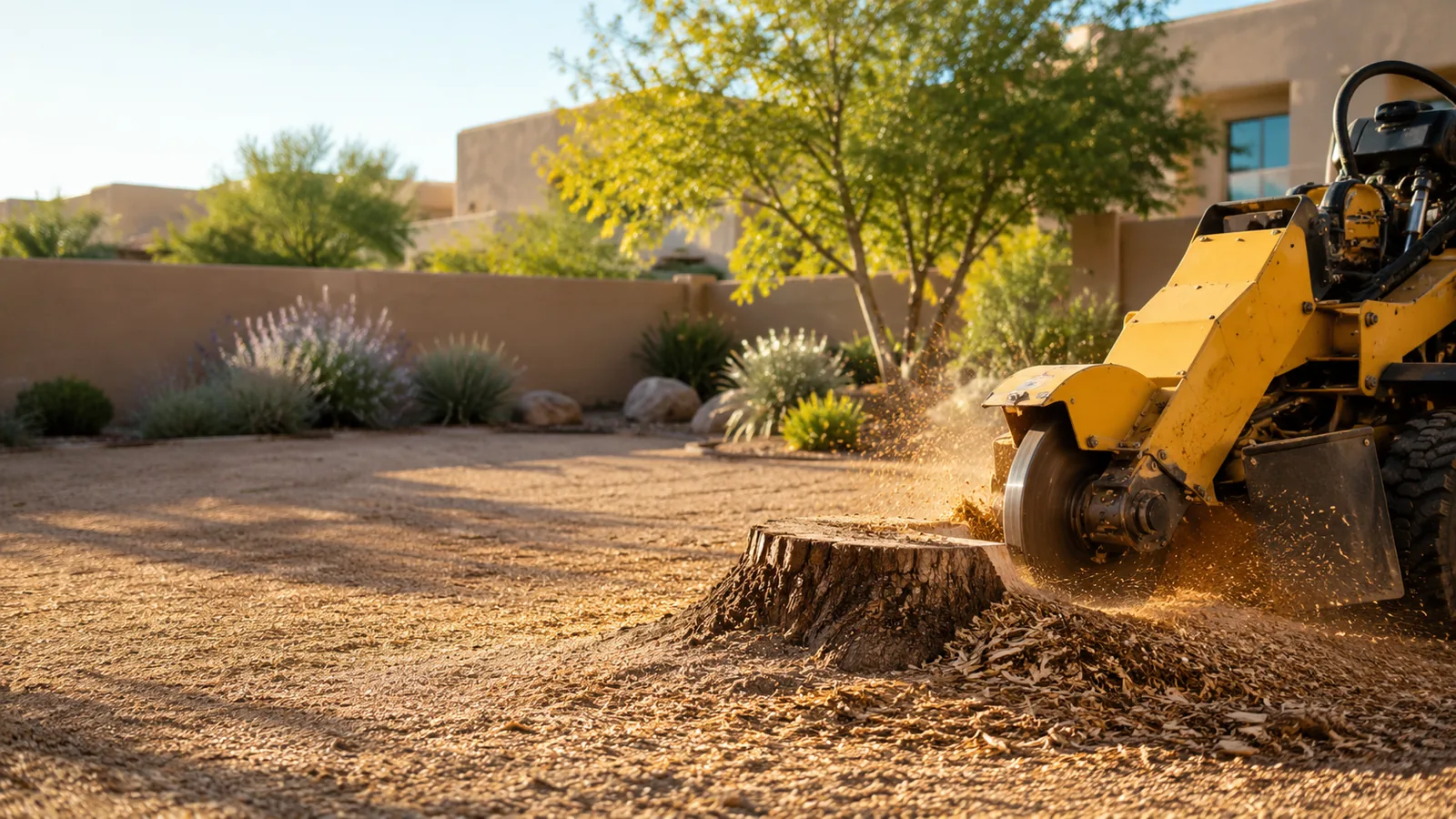
After the grinder leaves
The stump becomes a chip-and-soil pile
Grinding produces more material than many homeowners expect because the cutting wheel turns the stump and visible roots into chips. Some of that material fills the grinding cavity, and the rest may form a mound around the work area.
Before the job, decide whether you want chips left for mulch, spread nearby, or included in a cleanup request. Removing every chip can involve additional labor and hauling.
- Keep clean chips for mulch where appropriate
- Remove excess chips before installing lawn or turf
- Expect a mixture of wood and soil in the cavity
- Confirm cleanup expectations before work begins
The area can settle over time
Wood material breaks down and loses volume. A cavity filled mainly with chips may settle, especially after watering or rain. For a finished lawn, walkway edge, artificial turf base, or other level surface, excess chips should be removed and replaced with suitable soil or base material.
Check the area again after initial settling and add material as needed before completing the final landscape finish.
Plan landscaping around remaining roots
Grinding does not remove the entire root system. Most roots stay underground and decay gradually. Small plants, gravel, or lawn may work after proper preparation, but large replacement trees, trenches, concrete, or structural work may need additional root review.
If the original tree was prone to sprouting, watch for new shoots and discuss treatment or follow-up if they appear.
Ready for a local quote?Send clear photos, project size or scope, access details, and the service needed for a more useful first review.
Common questions
Frequently asked questions
Can I plant grass immediately after stump grinding?
Remove excess wood chips, add suitable topsoil, level the area, and follow the grass or sod installer’s preparation guidance. A chip-heavy fill can settle and tie up nitrogen as it decomposes.
Should stump chips be left in the hole?
Some chips can fill the cavity, but a finished lawn, turf base, or hardscape usually needs excess chips removed and replaced with more stable material.
Will the ground sink later?
Some settling is common as chips and remaining roots decompose. Additional soil or base material may be needed later.
Can I pour concrete over a ground stump?
Concrete and structural work need a stable base. Remaining organic material and roots can decay and settle, so the exact area should be reviewed before construction.
What happens to the roots after grinding?
Most underground roots remain in place and gradually decay. They are not usually removed during standard stump grinding.
Helpful project photos
Show the work area, access, and nearby obstacles.
Clear photos make the first review more useful while keeping the focus on the actual service project.
Whole work areaStep back far enough to show the tree, stump, debris, and surrounding yard.
Size and contextInclude a useful size reference and nearby structures or surfaces.
Access routeShow gates, turns, steps, slopes, and the route equipment would use.
Nearby obstaclesCapture concrete, walls, rock, irrigation, utilities, structures, and roots.