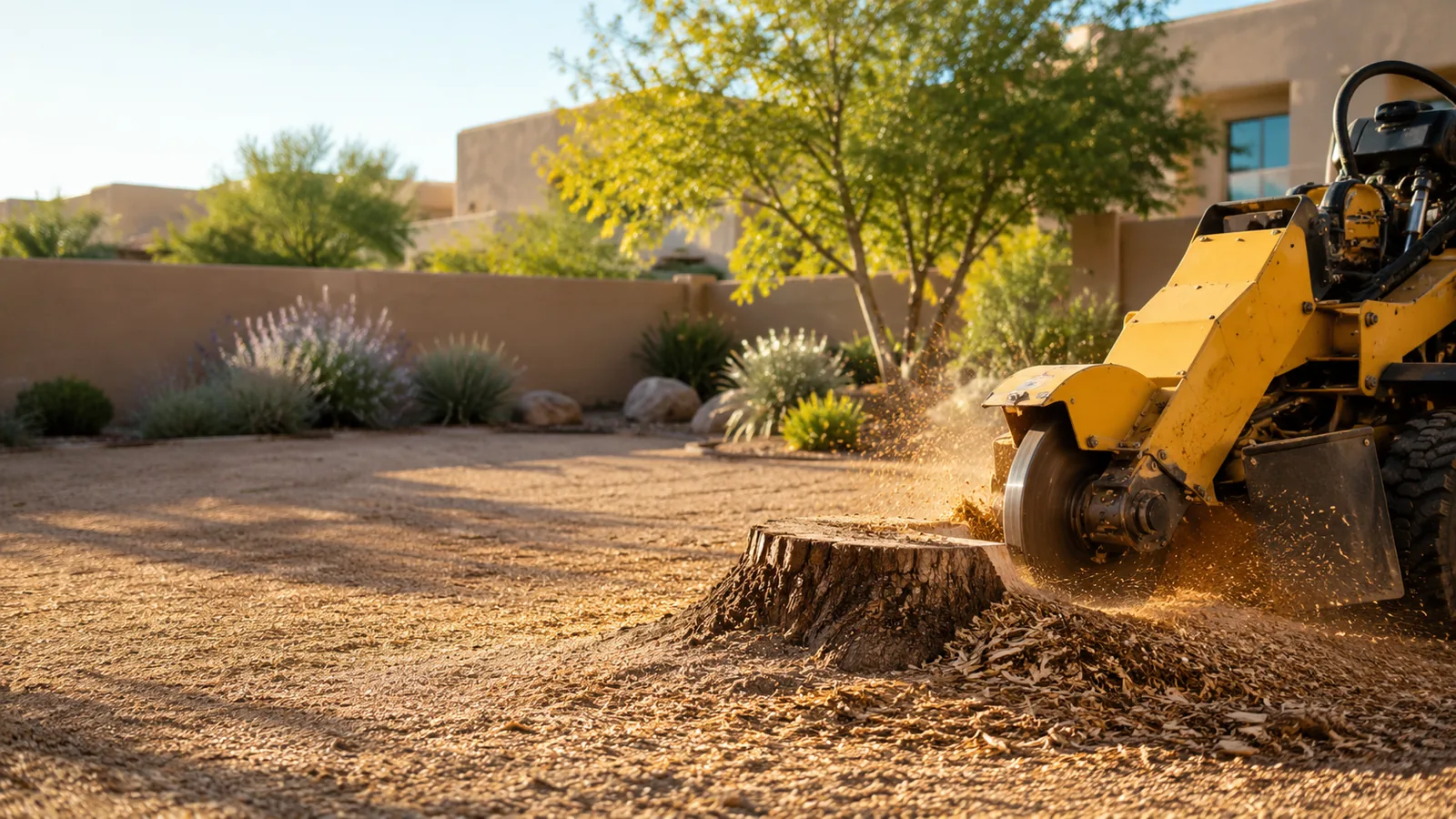
Know the limits before renting equipment
Start with the machine instructions and the site, not an online shortcut
Stump grinders are powerful cutting machines. Use only equipment you are authorized and trained to operate, follow the manufacturer and rental-company instructions, wear the required protective equipment, and keep other people outside the work zone.
This guide is not an operating manual. The exact machine, stump, slope, soil, roots, access, and nearby property conditions determine whether the project is appropriate for DIY work.
- Read and follow the equipment manual
- Use required eye, hearing, foot, hand, and leg protection
- Create a controlled work zone
- Keep children, pets, and bystanders away
- Stop when visibility or site conditions are uncertain
Buried systems and nearby improvements can change the decision
Do not assume the area is clear because no lines are visible. Public utility locating may not identify private irrigation, landscape lighting, pool lines, septic components, or other owner-installed systems.
Concrete, walls, fences, glass, vehicles, structures, decorative rock, slopes, and soft ground can create additional risks. A professional site review is often the better choice when the stump is close to anything that could be damaged.
Plan the material and final surface before grinding
Grinding creates a mixture of wood chips, roots, and soil. Decide whether the material will stay onsite, be consolidated, be partially removed, or be hauled away. The cavity may settle and may need imported soil, grading, and later restoration.
If the area will support concrete, pavers, a wall, a deck, artificial turf, a shed, or another structure, ask that contractor what excavation and subgrade preparation are required. Standard stump grinding is not the same as structural site preparation.
Ready for a local quote?Send clear photos, project size or scope, access details, and the service needed for a more useful first review.
Common questions
Frequently asked questions
Is DIY stump grinding safe for beginners?
It can involve significant risk. Only use equipment you are trained and authorized to operate, follow all instructions, and avoid sites with uncertain access, buried features, slopes, or nearby improvements.
Do I need utility locating before DIY grinding?
You should identify public and private buried systems before work. Public locates may not cover irrigation, lighting, pool, septic, or other private components.
Can I grind next to a fence or patio myself?
Close-clearance sites increase property-damage and access risks. Professional review is usually the better option when the stump is near finished surfaces or structures.
What happens to the wood chips?
They may be left, consolidated, removed, or hauled away depending on the plan. Confirm the volume, disposal method, backfill, and restoration before starting.
When should I stop and call a professional?
Stop when the machine, access, slope, buried features, nearby obstacles, stump size, or operating conditions exceed your training or comfort level.
Helpful project photos
Show the work area, access, and nearby obstacles.
Clear photos make the first review more useful while keeping the focus on the actual service project.
Whole work areaStep back far enough to show the tree, stump, debris, and surrounding yard.
Size and contextInclude a useful size reference and nearby structures or surfaces.
Access routeShow gates, turns, steps, slopes, and the route equipment would use.
Nearby obstaclesCapture concrete, walls, rock, irrigation, utilities, structures, and roots.