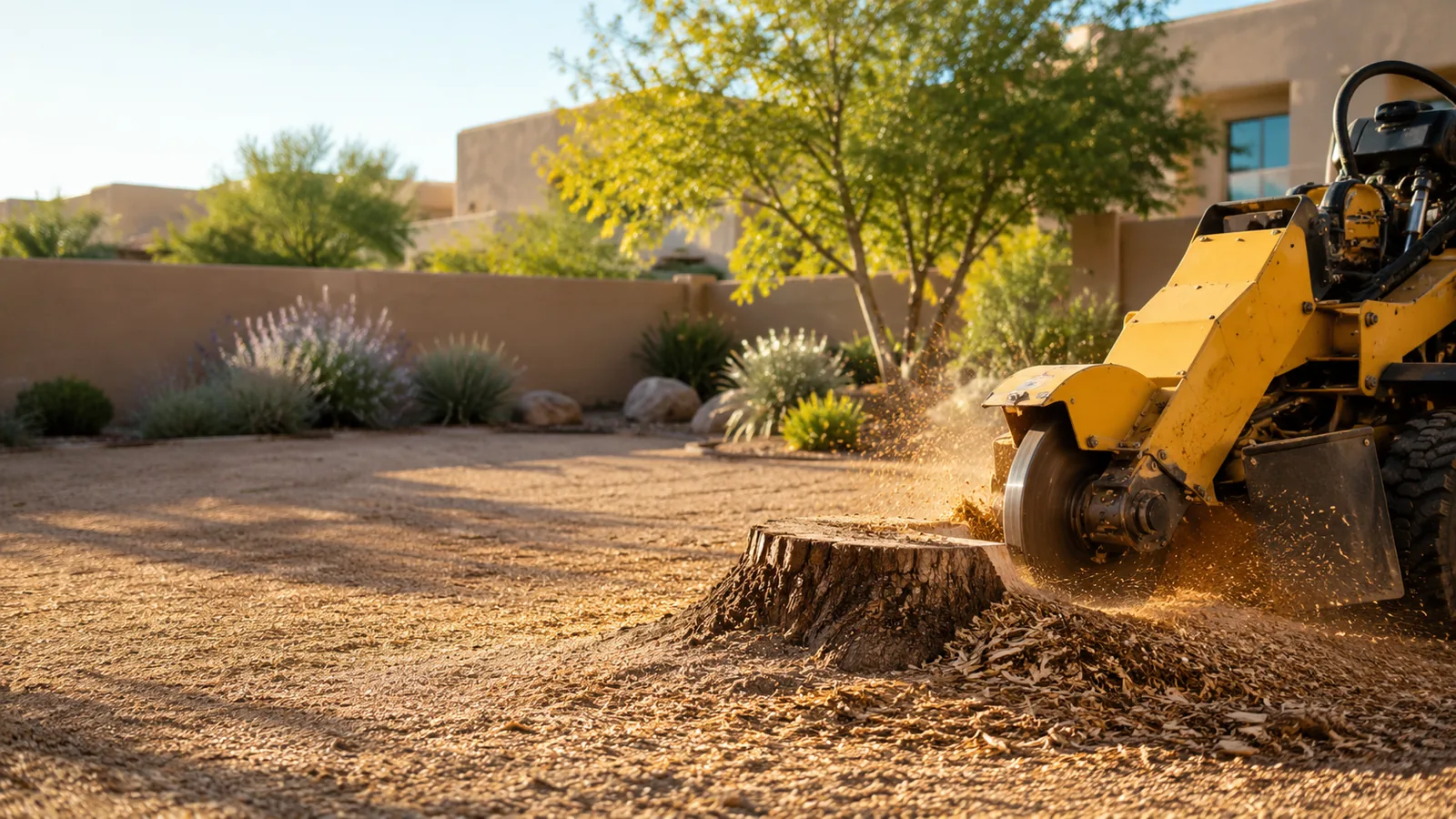
Prepare the soil before planting
Remove enough wood-rich material for the lawn plan
Grinding creates a mixture of chips and soil. Leaving a deep pocket of that material can change moisture, nitrogen availability, and settlement compared with the surrounding yard.
Ask the lawn installer how much material should be removed and what soil blend should replace it. The answer may differ for seed, sod, high-traffic turf, or a small decorative patch.
- Chip and loose-soil removal depth
- Topsoil or amendment requirements
- Finished grade and drainage
- Seed, sod, and watering schedule
Expect remaining roots and gradual settlement
Stump grinding lowers the main wood mass but does not remove the entire root system. As roots decay and disturbed soil consolidates, the area can settle and may need additional soil later.
A slightly raised finish may be appropriate in some cases, but the lawn professional should set the final grade rather than relying on a fixed rule.
Repair and test irrigation before covering the area
Locate sprinkler heads, valves, drip tubing, and control wire before grinding. After stump work and soil replacement, run the zone and confirm coverage before sod or seed hides the repair area.
Avoid placing chips over valve boxes, drains, or low points that need to remain accessible.
Ready for a local quote?Send clear photos, project size or scope, access details, and the service needed for a more useful first review.
Common questions
Frequently asked questions
Can I lay sod immediately after stump grinding?
Only after chips, soil, grade, irrigation, and compaction are prepared for the sod plan. Immediate installation over loose grindings can create a low or uneven area later.
Will grass grow in stump grindings?
Grass may struggle in a deep chip-and-soil mixture. Replacing enough material with suitable soil generally gives the lawn a better start.
How much soil should replace the chips?
That depends on the cavity, remaining roots, lawn type, and final grade. The lawn installer should specify the preparation depth and soil mix.
Will the area settle later?
It can. Disturbed soil and decaying roots may settle over time, so future topdressing or minor repair may be needed.
Should sprinklers be checked before planting?
Yes. Test the zone, repair damage, and confirm coverage before the new lawn surface is installed.
Helpful project photos
Show the work area, access, and nearby obstacles.
Clear photos make the first review more useful while keeping the focus on the actual service project.
Whole work areaStep back far enough to show the tree, stump, debris, and surrounding yard.
Size and contextInclude a useful size reference and nearby structures or surfaces.
Access routeShow gates, turns, steps, slopes, and the route equipment would use.
Nearby obstaclesCapture concrete, walls, rock, irrigation, utilities, structures, and roots.