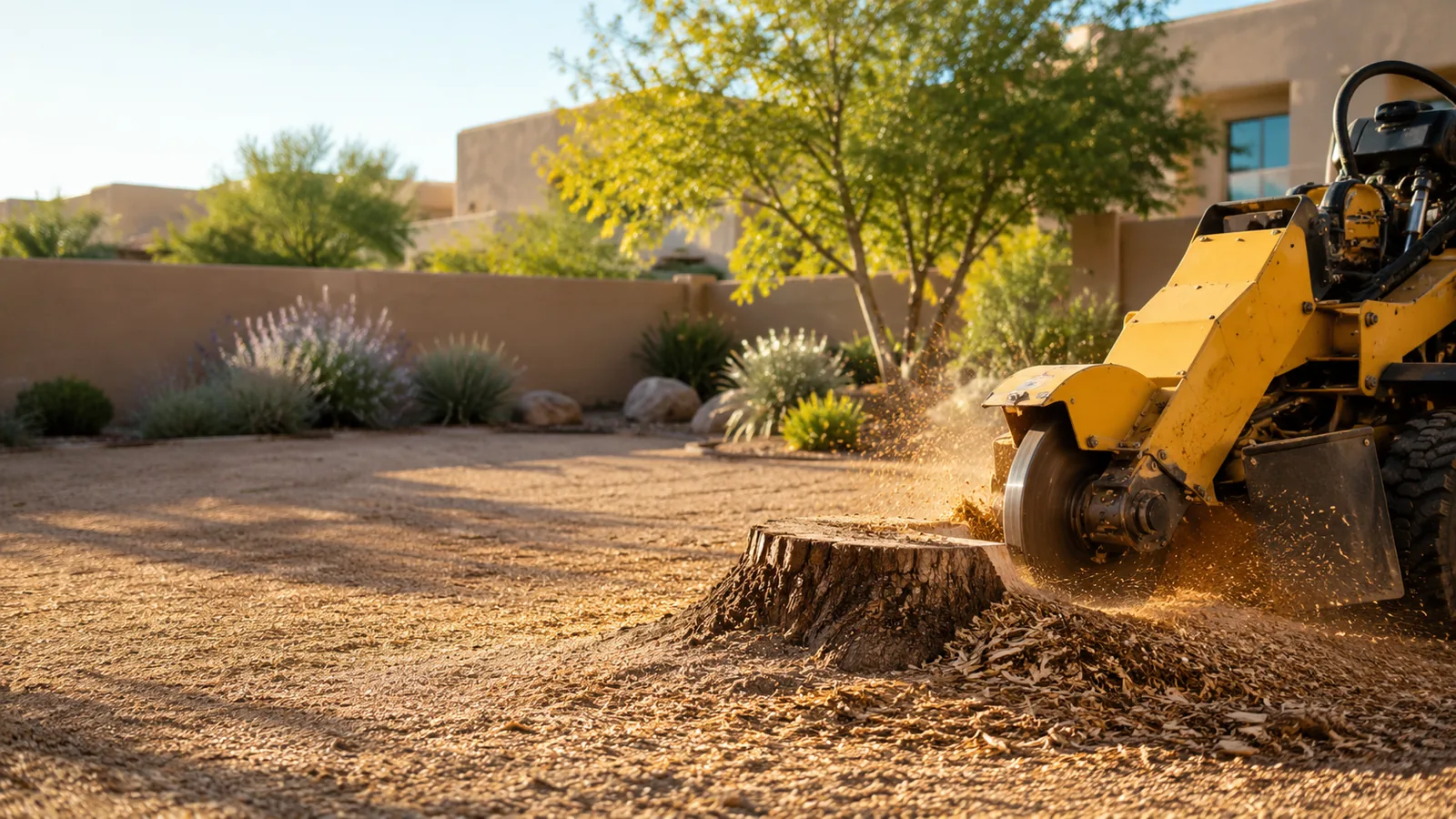
Big-stump project planning
Large stumps are more than a diameter measurement
A wide stump may have a raised root flare, multiple trunks, buried rocks, old hardware, or roots extending into hardscape and irrigation areas. Photos should show the entire base rather than only the cut surface.
The safest and most practical option may be grinding, selected root work, excavation, or a staged approach depending on what must happen in the space afterward.
- Wide single-trunk stumps
- Multi-trunk and irregular bases
- Large visible root flare
- Projects near walls, concrete, utilities, or irrigation
Access can matter as much as stump size
Measure gates, side yards, turns, slopes, and the distance from the street or driveway. Show overhead clearance, soft ground, decorative rock, retaining walls, and any surface that must be protected.
A large stump in an open front yard is a different project from the same stump behind a narrow gate or inside a finished courtyard.
The final use determines how much removal is enough
Routine landscape cleanup may only require below-grade grinding and proper fill. Concrete, structures, trenching, or replanting in the exact location may require more excavation and removal of organic material. Explain the next project before accepting a scope.
Ready for a local quote?Send clear photos, project size or scope, access details, and the service needed for a more useful first review.
Common questions
Frequently asked questions
How do I measure a large stump?
Measure across the widest visible part of the stump and root flare. Include a tape measure or familiar object in the photo for scale.
Is full removal always necessary for a large stump?
No. Grinding may be enough for many landscape uses, while construction or exact-location replanting can require more extensive removal.
Can large surface roots be ground too?
Selected visible roots may be reviewed, but underground roots and roots near utilities or hardscape require extra caution.
What should I mention about embedded metal?
Report nails, wire, fencing, concrete, rocks, or other known material in or near the stump because it can affect safety and equipment.
Will a large stump create a lot of chips?
Often yes. Discuss whether chips will be left, spread, consolidated, or removed and how the area will be filled afterward.
Helpful project photos
Show the work area, access, and nearby obstacles.
Clear photos make the first review more useful while keeping the focus on the actual service project.
Whole work areaStep back far enough to show the tree, stump, debris, and surrounding yard.
Size and contextInclude a useful size reference and nearby structures or surfaces.
Access routeShow gates, turns, steps, slopes, and the route equipment would use.
Nearby obstaclesCapture concrete, walls, rock, irrigation, utilities, structures, and roots.